Start the conversation

MOMO Handles

Where trade infrastructure meets design ambition.

MOMO Handles moved from a NetSuite ordering plugin to Shopify Plus. One platform now runs account-based trade ordering for thousands of customers and a design-led experience for architects and homeowners.

Sector
Architectural hardware, trade and retail
Services
Platform migration, data migration, content strategy
Platforms
Shopify Plus, NetSuite, SalesLayer, Boomi
A hand placing a polished bar handle on green and cream material samples

A platform the brand had outgrown.

For years, MOMO Handles ran on a NetSuite ordering plugin. It processed transactions efficiently, but it could not support the direction the brand was moving in. Templates were fixed, reporting was limited and content was constrained. The site worked as an ordering interface, not a brand experience.

Meanwhile, the business had changed. What began as a commodity trade supplier had become a design-led architectural brand. Architects, designers and homeowners were now part of the audience. Trade remained the revenue engine, but research, specification, inspiration and project planning were now part of the purchase journey.

The platform needed to reflect that shift.

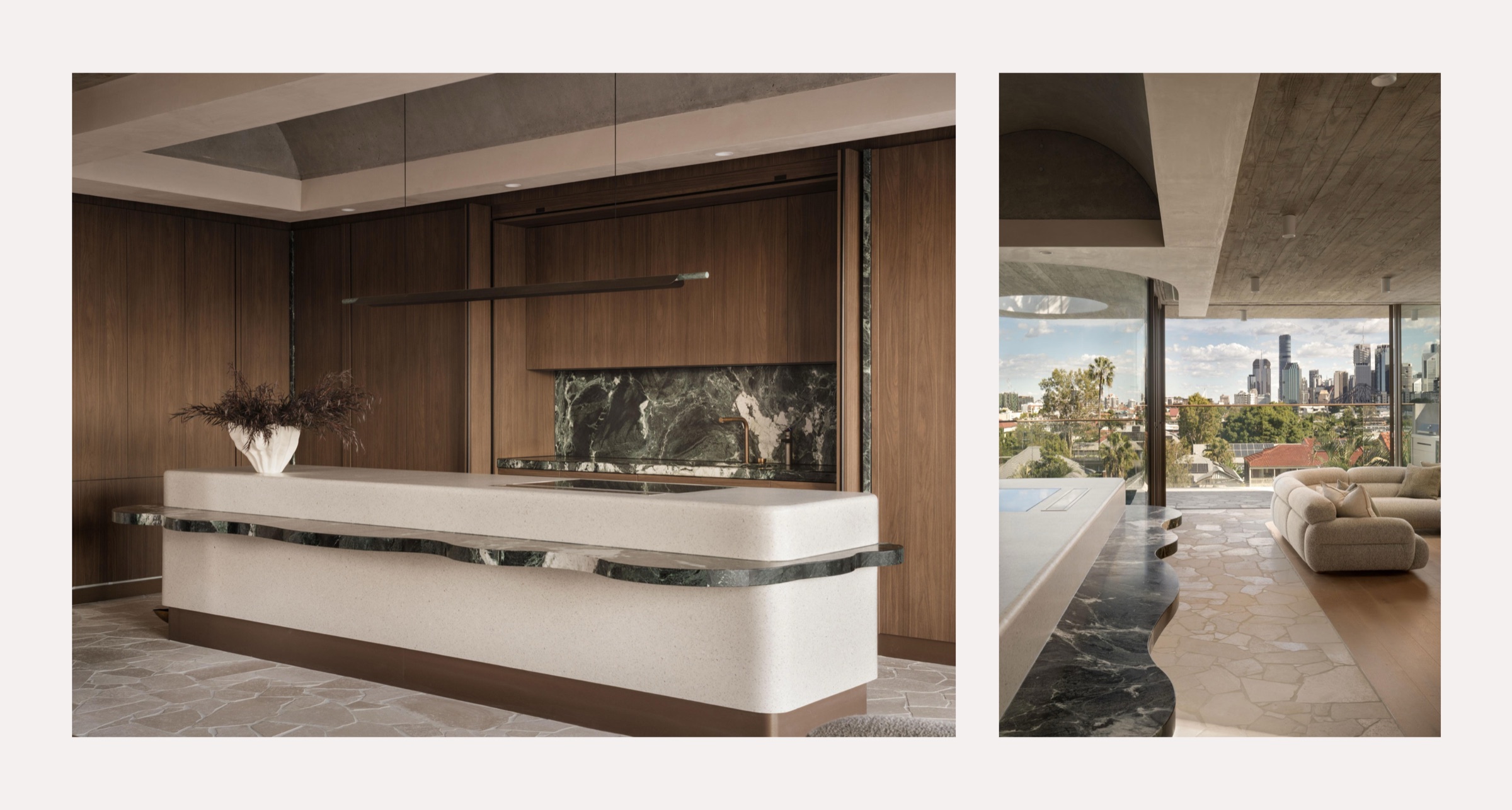
Two project photographs from the MOMO Handles site, a kitchen island in white stone and green marble and a living room with a city view

The complexity behind the scenes.

On the surface, the challenge looked like a replatform. In reality, it was structural.

NetSuite stores product data for operations, not presentation. Variants existed as individual records rather than structured relationships: one handle design in five lengths and five finishes became 25 separate products. That worked for inventory. It did not work for a coherent web experience.

Pricing added another layer. Thousands of trade accounts buy on negotiated rates, and each customer sees different prices across thousands of SKUs. Accuracy is a requirement, not a feature.

Technical specifications changed with every configuration. Dimensions, compliance data and line drawings had to update with each selection, without manual work. And the platform had to do two jobs at once: research-led browsing for architects and homeowners, and high-volume B2B ordering with account-based pricing.

The shift to Shopify Plus.

Matter partnered with MOMO Handles to migrate to Shopify Plus. The choice was about alignment, not only e-commerce capability: Shopify Plus offered the performance and B2B functionality the business needed, and the flexibility to express the brand properly.

Choosing the platform was only one part of the solution. Working alongside MOMO Handles’ ERP integration partner, Matter put a structured data architecture in place, with SalesLayer as the central product information hub. The result is a clean flow of data across the systems, with no manual duplication.

One flow of product data.

ERP

NetSuite

Holds the operational records for products, stock and trade accounts.

Link

Boomi

The integration middleware that moves records between the systems.

PIM

SalesLayer

Turns operational records into structured, presentation-ready product data.

Commerce

Shopify Plus

Runs the storefront and B2B ordering, with each account’s own pricing.

Built to handle the complexity.

Account pricing
Real-time pricing mapped to each customer account.
Variants
One product with its lengths and finishes, presented as a set.
Specifications
Dimensions and compliance data that update with each configuration.
Product lifecycle
New and changed products flow from NetSuite to Shopify automatically.
Line drawings
The correct technical drawing for each selection.

Enabling the brand.

Infrastructure created stability. It also unlocked expression.

Matter developed a content framework that reflects MOMO Handles’ evolution into a design-led architectural brand, while still supporting its trade foundation. Project showcases attribute products clearly. An editorial layer carries guides and commentary. Flexible templates let the marketing team control content without a developer. Storytelling brings depth to collections and campaigns.

The site now supports both inspiration and transaction: research is encouraged, and ordering is frictionless.

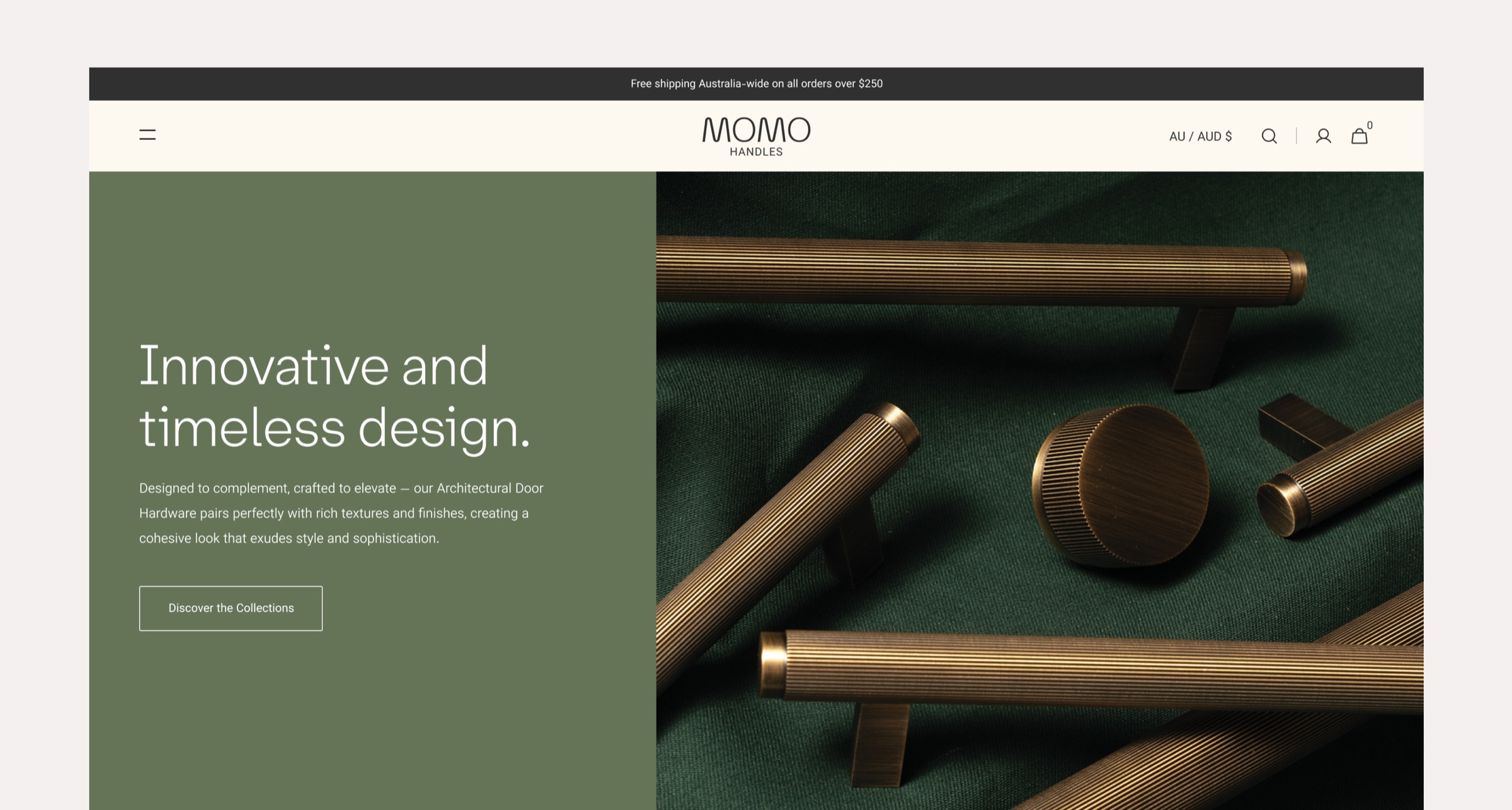
The MOMO Handles homepage, a green panel with the headline beside brass bar handles on green fabric
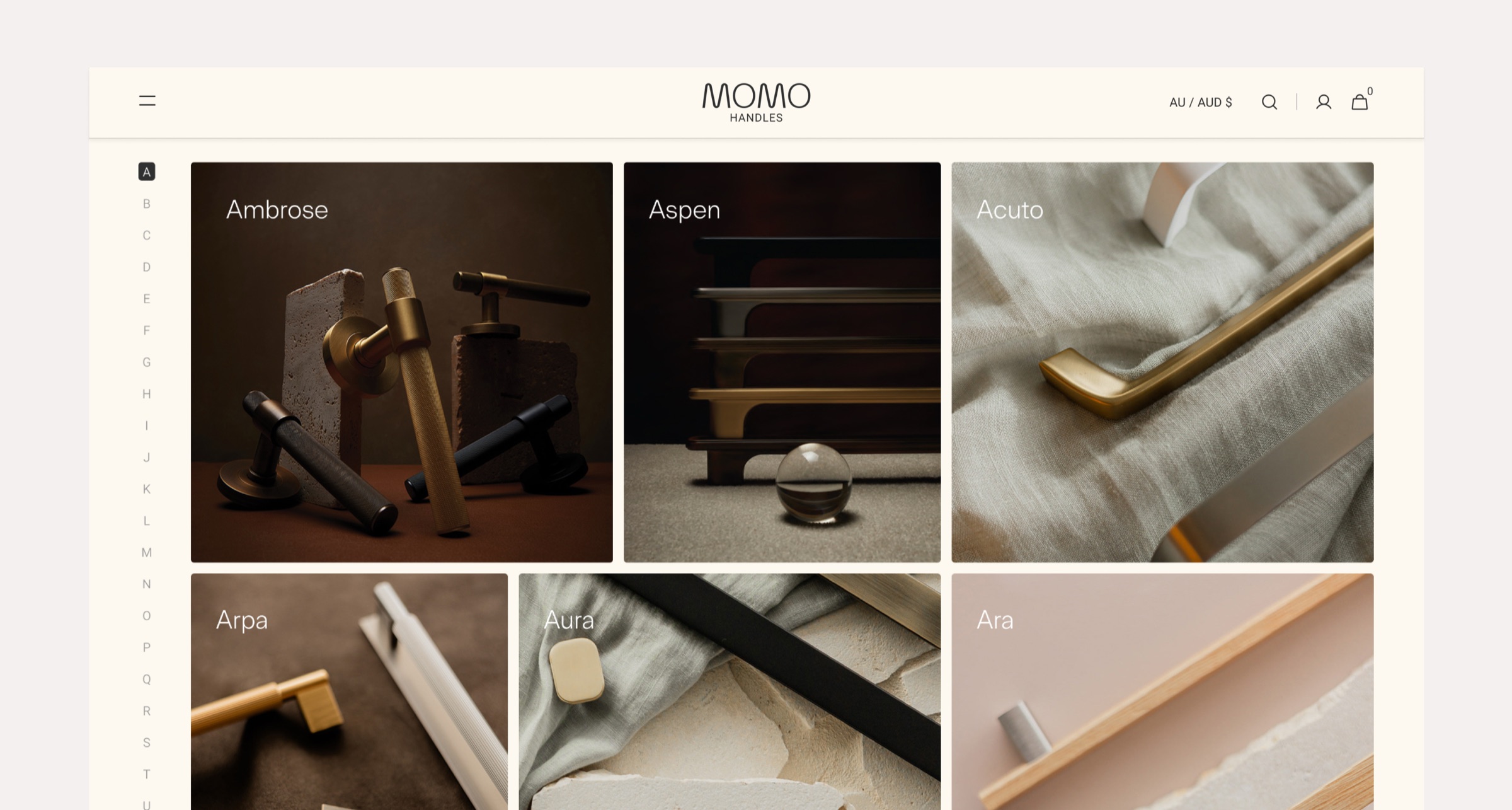
The MOMO Handles collections page, a grid of handle ranges with an A to Z index
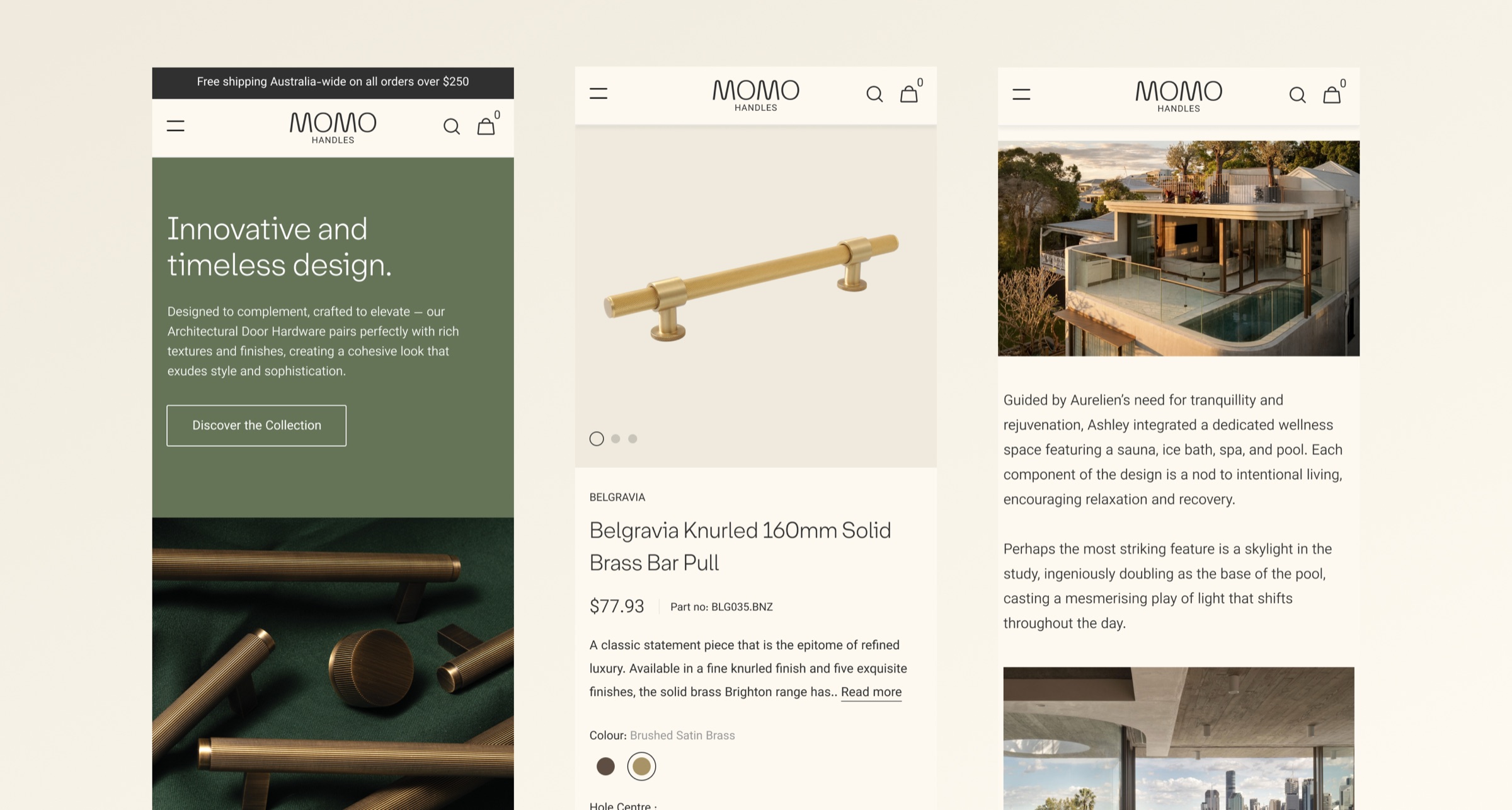
Three phone screens of the MOMO Handles site, the homepage, a product page and a project story
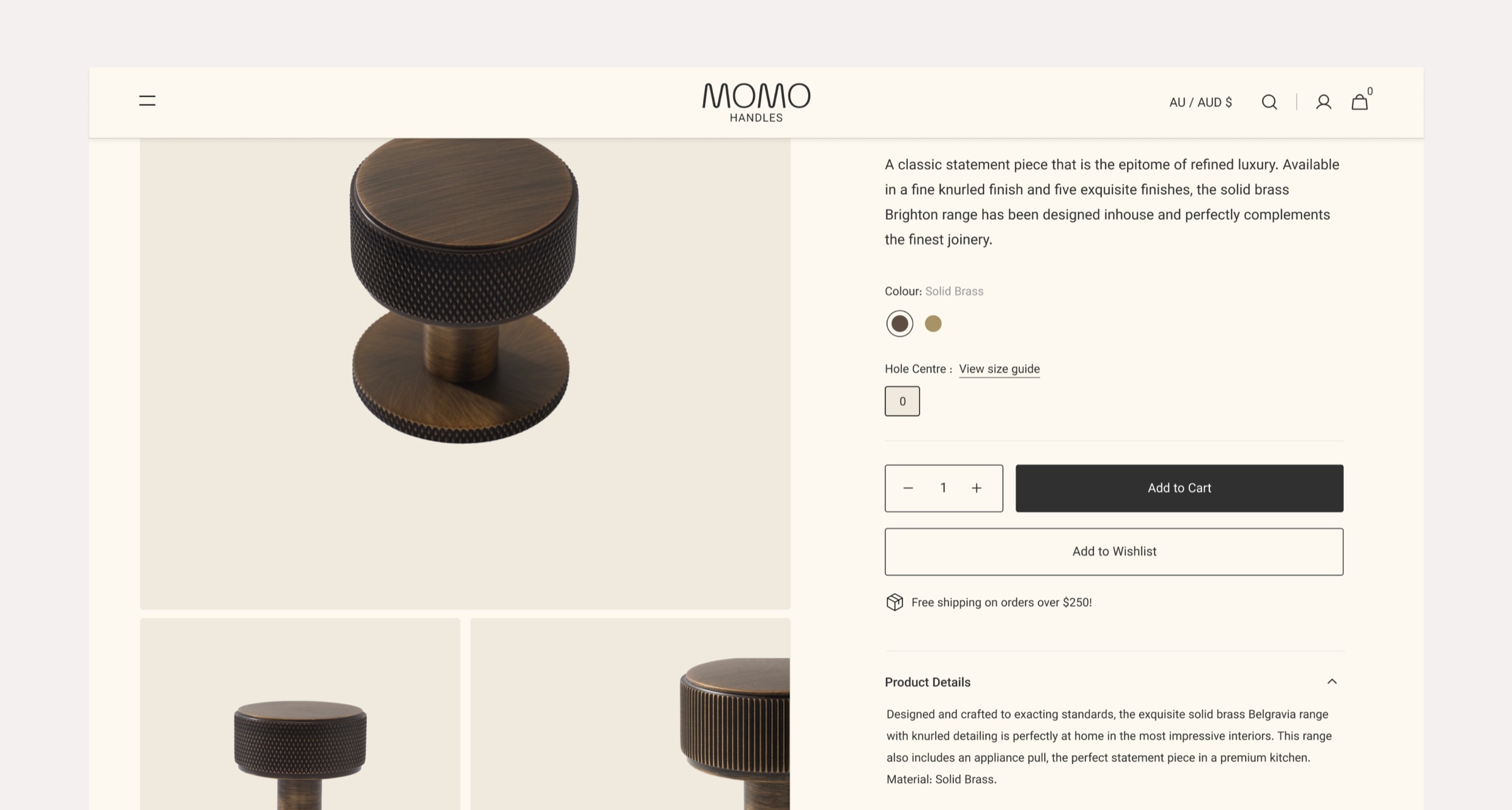
A MOMO Handles product page for a knurled brass knob, with finishes, hole centres and add to cart

What made it work.

Strategic direction shaped the project from the start. MOMO Handles set out where the business was heading, and Matter designed the systems to support that direction.

Short feedback loops kept momentum high. Platform constraints were anticipated early. Decisions were made with commercial clarity.

“It was very easy working with Matter Design. They were very responsive and prompt in getting things done. I’ve had projects in the past that weren’t exactly smooth-sailing, so to have a project like this that was highly collaborative was really good to be a part of.”

Marc BennettMarketing Director, MOMO Handles

Positioned for growth.

The site is no longer an ordering plugin. It is infrastructure that supports scale. Content campaigns are planned, traffic can grow without straining the system, and the product range can grow without a structural breakdown.

When systems are structured correctly, growth stops being constrained by technology. It becomes enabled by it.

More work.

View all work

Tell us what should work better.

Start the conversation

Three quick questions, then we get back to you.