Magento vs BigCommerce (2026): The Enterprise Shift from Self-Hosted Commerce to Composable SaaS
In 2026, Magento (Adobe Commerce) and BigCommerce represent two fundamentally different philosophies for scaling enterprise ecommerce.
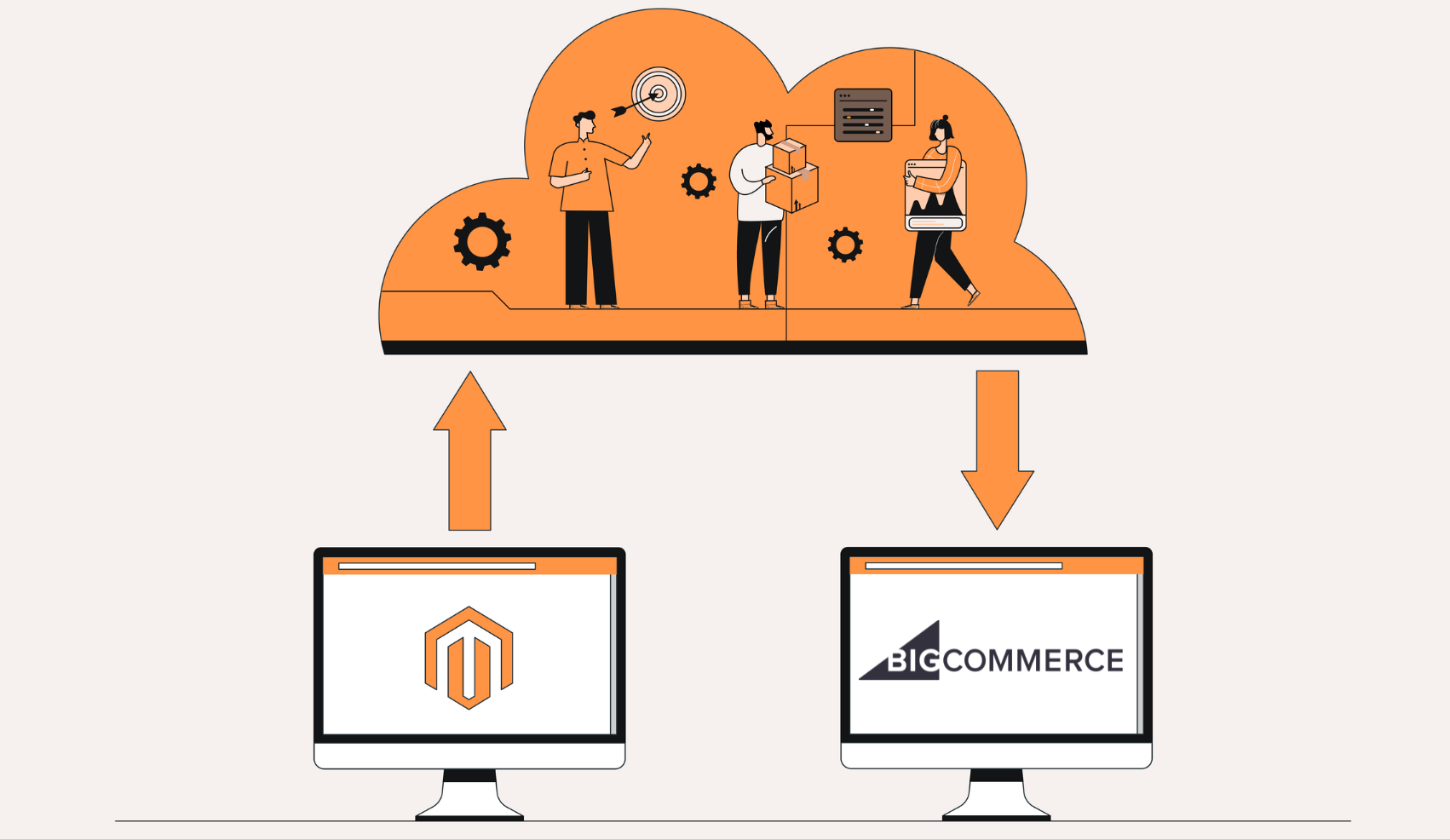
Magento is a self-hosted, highly extensible commerce framework where teams can own and customise nearly everything, from checkout logic to data architecture. That depth comes with a cost: you inherit infrastructure responsibility, upgrade complexity, and a continuous security and compatibility workload.
BigCommerce is an open SaaS commerce engine designed to externalise infrastructure burden while keeping the platform composable through APIs, storefront frameworks (Catalyst), and B2B SaaS capabilities. BigCommerce’s value proposition in 2026 is not “ease of use”. It’s predictability, extensibility, and speed of change without carrying the operational weight of self-managed commerce.
For Australian brands running B2B portals, multi-store structures, and high-volume campaigns, this is no longer a platform preference. It’s an operating model choice.
Quick Answers: Magento vs BigCommerce (2026)
Q: Which platform is better in 2026: Magento or BigCommerce?
For brands that require deep customisation, in-house engineering control, or complex legacy integrations, Magento remains a powerful solution. However, for many enterprise and scaling Australian brands, BigCommerce is increasingly the better default due to reduced operational overhead, modern composable storefront tooling (Catalyst), and mature B2B SaaS capabilities.
Q: What’s the biggest technical difference?
Magento internalises complexity into your codebase and infrastructure. BigCommerce externalises complexity into platform primitives, APIs, and SaaS features, enabling faster iteration with less platform maintenance responsibility.
Q: Which is better for B2B?
BigCommerce’s B2B Edition includes a React-based Buyer Portal and SaaS APIs supporting account management, quotes, and order histories. Magento supports B2B, but typically requires heavier customisation and ongoing upgrade governance.
Q: What changed recently that impacts this choice?
Magento Open Source 2.4.7 introduced major compatibility and platform dependency requirements (PHP 8.3, RabbitMQ 3.13, Varnish 7.4, Redis 7.2, OpenSearch/Elasticsearch requirements, and shipping integration updates), reinforcing how upgrade-heavy the ecosystem remains.
BigCommerce has accelerated composable commerce through Catalyst (Next.js + React components + GraphQL Storefront API), making modern storefront builds significantly faster and more consistent.
1) Platform Philosophy: Code-Owned Commerce vs Platform-Owned Commerce
The real Magento vs BigCommerce decision in 2026 is where complexity is meant to live.
Magento (Adobe Commerce): Complexity in the Codebase
Magento is designed as a commerce framework. That means power comes from:
- custom modules and extensions
- deep control over checkout and catalogue logic
- control over infrastructure, database, caching, search, and queue systems
Magento is best when engineering capability is a core competitive advantage, and the organisation can fund the operational discipline required to keep the system healthy.
Magento 2.4.7 reinforces this reality by requiring coordination across modern infrastructure dependencies (PHP, RabbitMQ, Varnish, Redis, OpenSearch/Elasticsearch), as well as ongoing integration migrations (e.g., the FedEx REST API migration, UPS XML API removals).
BigCommerce: Complexity at the Platform Edge
BigCommerce is built as an open SaaS commerce engine. The core stays stable and platform-managed (hosting, performance characteristics, security posture), while customisation happens at the edges via:
- APIs and integrations
- composable storefront frameworks
- B2B Buyer Portal customisation
- extensibility through structured commerce primitives
BigCommerce’s philosophy is: “Your team should build business differentiation, not run commerce infrastructure.”
2) Total Cost of Ownership (TCO): Subscription Cost vs Operational Cost
In enterprise ecommerce, the platform cost ≠ platform price.
Magento TCO Pattern: High Capability, High Maintenance
Magento’s true cost comes from:
- hosting and DevOps
- security patching and monitoring
- extension compatibility testing
- upgrade cycles across core + dependencies + custom modules
Adobe publishes a structured patch and security release schedule, which reinforces that Magento/Adobe Commerce requires an ongoing patch governance model.
Magento can be the right choice, but only when the organisation accepts that e-commerce becomes a software product with continuous engineering investment.
BigCommerce TCO Pattern: Predictable Operations + Integration Governance
BigCommerce shifts much of the operational burden into the platform:
- managed infrastructure
- managed security baselines
- predictable platform upgrades
- fewer catastrophic upgrade events
The TCO shifts toward:
- integration governance
- data modelling across ERP/PIM/WMS
- storefront optimisation (Catalyst or headless builds)
Net result: lower “maintenance tax,” higher ability to invest in growth and experience.
3) Storefront Architecture in 2026: Catalyst vs Magento Frontend Complexity
BigCommerce Catalyst: The Modern Composable Baseline
Catalyst is BigCommerce’s composable storefront framework, built with:
- Next.js
- React storefront components
- GraphQL Storefront API
- prebuilt patterns optimised for SEO, accessibility, and performance
Catalyst reduces a major historical barrier in headless commerce: teams no longer need to wire up every e-commerce component manually. It gives a fast, structured baseline, letting teams focus on a unique experience and conversion strategy.
This is a meaningful shift for Magento merchants considering modernisation: BigCommerce can now deliver modern storefronts with less frontend reinvention, while keeping a SaaS operational model.
Magento: Frontend Power, Frontend Burden
Magento storefront builds are powerful but heavier:
- theme complexity
- dependency management
- performance tuning across backend + caching layers
- constant compatibility stress as PHP, search, and extensions evolve
Magento can absolutely power exceptional storefronts. However, the frontend path tends to be more engineering-intensive.
4) Security & Risk: The Hidden Cost of Self-Managed Commerce
Magento security is not theoretical. It is a continuous risk domain.
Adobe regularly publishes security updates for Adobe Commerce and Magento Open Source, documenting critical vulnerabilities and exploit risks.
In 2026, Magento's security posture requires:
- patching discipline
- WAF configuration
- vulnerability scanning
- rapid incident response capability
This is particularly relevant for Australian enterprises under increasing privacy, security, and compliance expectations.
BigCommerce inherits much of that baseline responsibility centrally. The platform model doesn’t eliminate security needs — but it reduces the merchant’s operational burden.
5) B2B Commerce: SaaS Buyer Portal vs Custom B2B Implementations
B2B in 2026 is no longer just “hide prices and add bulk ordering.” It’s a fully digital buyer journey: account hierarchy, quoting workflows, order history, and approvals.
BigCommerce B2B: Buyer Portal as a Product Layer
BigCommerce’s Buyer Portal is a React-based application designed for B2B workflows such as:
- account management
- quote requests
- order histories
It is customisable and deployable across Catalyst, Stencil, and headless storefronts.
This provides a strong “B2B portal” product surface without requiring merchants to build everything from scratch.
Magento B2B: Powerful but Heavy
Magento can run complex B2B platforms, but typically requires:
- extensive module configuration
- ongoing extension governance
- testing across upgrades and custom workflows
Magento is often strong where B2B is deeply bespoke. However, that also increases long-term upgrade risk.
6) Integrations and Data Gravity: ERP, PIM, WMS as Systems of Record
In enterprise commerce, the commerce platform is rarely the system of record.
BigCommerce: Integration-Native by Design
BigCommerce is designed to sit cleanly inside broader stacks:
- ERP
- PIM
- WMS
- CDP / analytics
This is why BigCommerce is often adopted by brands that need commerce as a modular engine rather than an all-in-one suite.
Magento: Integration-Heavy and Customised
Magento can integrate deeply, but integration logic often becomes embedded into modules and custom code. Over time, this creates:
- upgrade fragility
- technical debt
- dependency coupling
This is one of the most common reasons enterprise brands reconsider Magento: not because Magento can’t do it, but because the maintenance and upgrade burden compounds.
7) AI and Automation Readiness: APIs and Predictability Win
In 2026, AI readiness is not “install a tool.” It’s the result of:
- stable APIs
- consistent product and customer data
- event-driven integration capability
- experimentation governance
BigCommerce's composable + SaaS model makes it easier to layer AI-driven workflows without destabilising the platform, especially when paired with Catalyst and structured data models.
Magento can support AI-driven commerce, but the operational reality is heavier: upgrades, compatibility, and infrastructure become part of the AI roadmap.
8) Decision Framework: Which Platform Fits Which Australian Brand?
Choose Magento if:
- deep customisation is a differentiator
- you have strong in-house engineering + DevOps
- your business can fund continuous platform governance
- B2B workflows require deep bespoke control
Choose BigCommerce if:
- you want enterprise capability without self-hosted burden
- B2B portals and buyer workflows need speed-to-value
- your stack is integration-led (ERP/WMS/PIM)
- composable storefront delivery (Catalyst) is a priority
- you want predictable scaling without owning infra
Final Perspective: Magento vs BigCommerce in 2026
The enterprise commerce conversation has shifted.
In 2026, the question is no longer:
“Which platform is more powerful?”
It’s:
Which platform lets your team move faster without becoming trapped in upgrade cycles, security patching, and infrastructure ownership?
Magento remains one of the most powerful commerce frameworks in the market — but the operational weight is real.
BigCommerce has become the most credible open SaaS alternative for brands that want enterprise commerce capability, B2B maturity, and composable storefront innovation without carrying the full cost of self-managed commerce.
Getting Started: Magento Modernisation & Platform Readiness in Australia
If you’re running Magento and exploring modernisation, the first step is not choosing a platform. It’s diagnosing:
- your upgrade and security burden
- your integration debt
- the cost of customisation ownership
- the B2B experience gap
- your team’s capacity to operate the commerce infrastructure
At Matter Design & Digital, we help teams map their platform choice to the reality of their business, then design the architecture and rollout strategy that reduces risk and accelerates growth.
We support Australian e-commerce brands through:
- Magento platform audits (TCO, risk, architecture)
- platform selection and feasibility
- Magento → BigCommerce migration strategy
- composable storefront builds (Catalyst)
- B2B portal strategy and implementation
- post-launch optimisation and governance
Questions
Is BigCommerce replacing Magento for enterprise ecommerce?
BigCommerce is increasingly selected by enterprise teams looking to reduce infrastructure ownership, simplify upgrades, and adopt composable storefront delivery. Magento still suits organisations requiring deep customisation and in-house platform ownership, but its operational cost is higher.
What is the biggest difference between Magento and BigCommerce?
Magento is self-hosted and code-owned, meaning you manage infrastructure, security patching, and upgrades. BigCommerce is open SaaS, meaning core operations are platform-managed while extensibility is achieved through APIs and composable storefront frameworks.
Is BigCommerce good for B2B in 2026?
Yes. BigCommerce B2B Edition includes a Buyer Portal supporting account management, quoting workflows, and order histories, with the ability to customise via React-based tooling.
Is Magento still viable in 2026?
Yes—particularly for businesses with complex legacy requirements or heavy custom workflows. But Magento viability depends on whether the organisation can sustain continuous patching, dependency upgrades, and extension governance.
Which is better for composable commerce?
BigCommerce has a clear composable strategy via Catalyst (Next.js + GraphQL Storefront API + React components), enabling faster modern storefront builds without building the full stack from scratch.