Universal Commerce Protocol: What Changes for Brands in 2026
In 2026, SEO gets you discovered, AEO gets you selected, and APIs get you transacted.
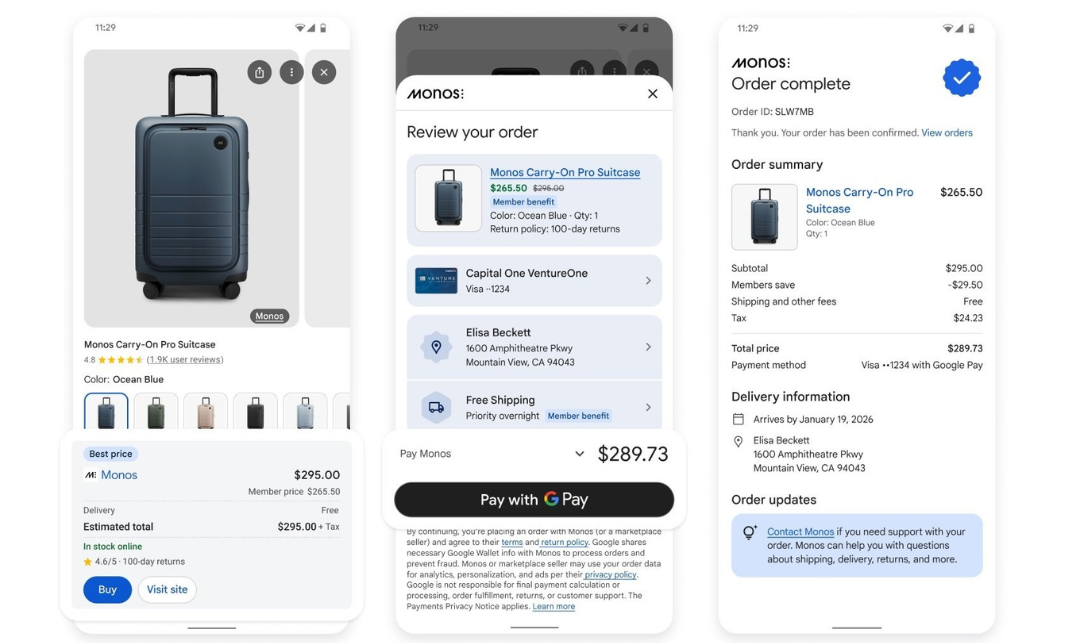
Search engines answer questions instead of ranking pages. Marketplaces ingest product data directly. Social platforms transact natively. AI agents assemble purchase decisions across systems. Checkout happens wherever the customer is, not where the brand built a storefront.
What's emerging is a protocol layer: a shared set of expectations about how commerce systems expose data, logic, and trust signals so other systems, human or machine, can consume them.
The question for brands is no longer which channel to optimise. It's whether their commerce stack can integrate when systems communicate directly with each other.
What Is the Universal Commerce Protocol?
The Universal Commerce Protocol is not a single standard. It is an emerging pattern where commerce platforms expose products, pricing, inventory, identity, and checkout logic in consistent, machine-readable ways. These can then be consumed by AI systems, marketplaces, social platforms, and partner ecosystems.
Google announced UCP in January 2026 at the National Retail Federation conference. Co-developed with Shopify and endorsed by over 20 partners, including Target, Walmart, Etsy, and Wayfair, the protocol establishes a standardised way for AI agents to connect with merchant backends across the full shopping journey.
This matters because AI-driven discovery, zero-click search, native social commerce, and automated B2B procurement all depend on interoperable commerce data, not bespoke storefront experiences.
The protocol does not replace e-commerce platforms. It changes how platforms are used. Platforms become systems of record and orchestration, not just storefront engines.
Brands that cannot expose clean, trusted, real-time commerce data will increasingly be excluded from AI answers, marketplace recommendations, automated procurement flows, and embedded checkout surfaces.
Why Protocol Is the Right Mental Model
A protocol is not a product. It's a shared contract.
HTTP didn't replace websites. It made them interoperable. Payment networks didn't replace banks. They made transactions portable.
A universal commerce protocol describes how products are identified, prices are calculated, availability is confirmed, customers are authenticated, orders are validated, and trust is established without assuming where the interaction happens.
In 2026, commerce flows through AI assistants and answer engines, marketplaces and retail media networks, social platforms with native checkout, B2B procurement systems, and partner ecosystems.
None of these wants your theme. They want your truth.
Three Forces Creating This Shift
AI-led discovery replaces navigation
AI systems don't browse websites. They assemble answers. To do that, they require structured product data, consistent pricing logic, inventory certainty, fulfilment constraints, and identity and eligibility rules. Unstructured content and bespoke frontend logic become invisible.
Checkout is no longer a destination
Checkout is becoming portable. Customers expect to buy inside social feeds, reorder via voice or chat, transact from comparison engines, and place B2B orders via procurement tools. This requires checkout logic that can be executed outside your primary storefront, securely and consistently.
UCP will power checkout directly in Google's AI Mode in Search and the Gemini app, allowing customers to complete purchases without leaving the conversational interface.
B2B and B2C architectures are converging
In B2B, especially, buyers expect real-time pricing, contract-aware catalogues, self-serve reordering, and API-driven procurement. These flows assume machine-to-machine commerce, not human-only interfaces.
What the Protocol Consists Of
This is not one specification. It's a stack of expectations. The complete technical specification is available on GitHub as an open-source standard.
Canonical product identity
Products must have stable IDs, consistent attributes, clear variants, and unambiguous availability. If your product exists differently across channels, AI systems cannot reconcile it.
Deterministic pricing logic
Prices must be explainable, reproducible, and context-aware for the customer, market, currency, and contract. Rendered prices are insufficient. Pricing needs to be callable.
Real-time availability and fulfilment constraints
Inventory, lead times, and fulfilment rules must be queryable, not inferred. AI systems and marketplaces will not guess availability in 2026. They will skip brands that cannot confirm it.
Portable checkout and order validation
Checkout becomes a service, not a page. That includes tax calculation, payment validation, fraud controls, and compliance enforcement. All are callable without rebuilding the logic per channel.
UCP is compatible with existing protocols, including Agent Payments Protocol (AP2), Agent2Agent (A2A), and Model Context Protocol (MCP), providing flexible integration options.
Trust and authority signals
Protocols require trust. This includes platform guarantees, compliance validation, data consistency, and historical reliability. Brands with fragmented systems create ambiguity. Ambiguity is filtered out.
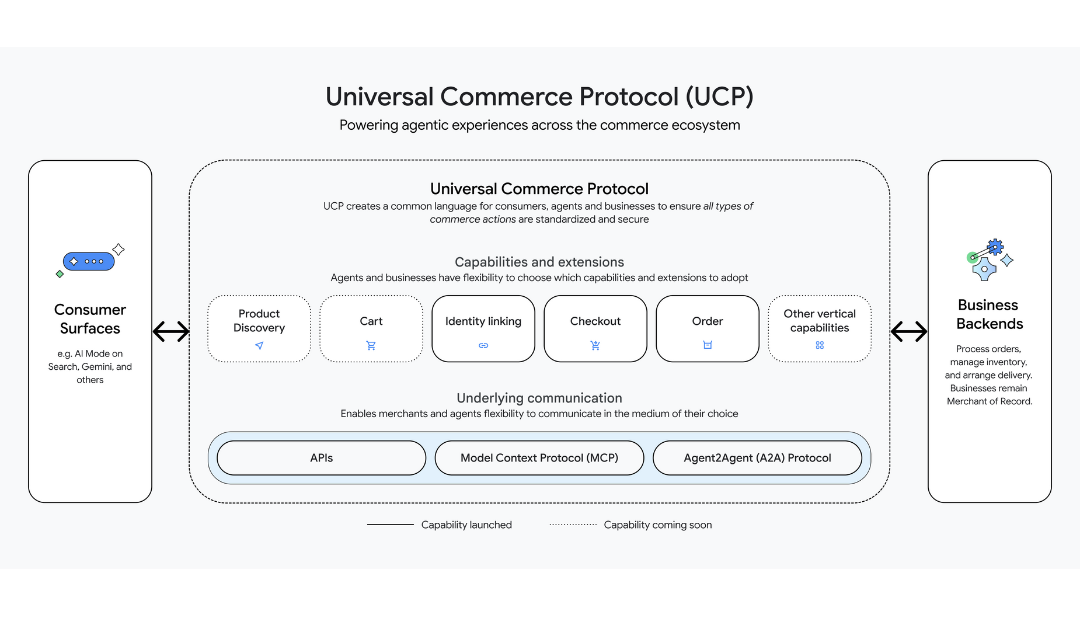
How This Changes E-commerce Architecture
The shift is from website-centric to API-first. From channel-specific logic to event-driven. From frontend-driven experiences to system-of-record-centric. From manual integrations to frontends as optional surfaces.
In 2026, your storefront is one consumer of your commerce engine, not the engine itself.
Why Platform Choice Matters More
Not all platforms participate equally in this protocol-driven world.
Platforms that centralise commerce logic, expose stable APIs, enforce consistency, and manage compliance and upgrades are far easier to adapt to universal commerce expectations.
Platforms that duplicate logic across plugins, fragment pricing and inventory, rely on frontend execution, and lack strong governance, struggle to participate at protocol scale.
Architecture decisions made today have outsized consequences in 2026.
What Changes Operationally
Commerce teams shift from page building to capability design
The focus moves to data models, API contracts, lifecycle orchestration, and integration governance.
Marketing teams lose control and gain leverage
You don't design the AI answer. You earn inclusion by being consistent, being reliable, and being machine-readable.
Google has introduced dozens of new Merchant Centre attributes designed for conversational commerce, including product question answers, compatible accessories, and substitutes.
Engineering teams become stewards, not builders
Less time maintaining bespoke logic. More time ensuring correctness, observability, and performance under automation.
What Brands Should Do Now
Audit your commerce truth
Ask where pricing is authoritative, where inventory is authoritative, and where checkout is validated. Are these answers consistent everywhere? If the answer is "it depends," you're not protocol-ready.
Reduce duplicated logic
Every duplicated rule is a future failure point. Consolidate pricing, promotions, tax, and fulfilment logic.
Design for machine consumers
Assume AI will read it, marketplaces will call it, and partners will rely on it. Structure accordingly.
The UCP documentation provides implementation guides, SDKs, and reference implementations for brands ready to integrate.
Treat SEO, AEO, and APIs as one system
In 2026, SEO gets you discovered, AEO gets you selected, and APIs get you transacted. They are not separate disciplines anymore.
Commerce Is Becoming a Protocol
The Universal Commerce Protocol isn't a product announcement. It's the inevitable result of interoperable systems colliding with AI-driven decision making.
Brands that succeed in 2026 will not be the ones with the most channels, the most tools, or the most content. They will be the ones with clean commerce truth, portable logic, consistent data, and platforms built for participation, not presentation.
The future of ecommerce is not where customers go. It's where your commerce can be executed.
Preparing for Protocol-Driven Commerce
If you're planning a platform migration, B2B expansion, AI-led discovery strategy, or performance rebuild, the most important step is understanding whether your current architecture can support protocol-level interoperability.
Matter helps brands assess commerce readiness for AI and machine-driven discovery, consolidate fragmented pricing and inventory logic, design API-first commerce architectures, prepare for AEO, zero-click search, and embedded checkout, and choose platforms that reduce protocol friction.