WooCommerce vs BigCommerce (2026): Merchant-Owned Stack vs Composable Open SaaS for Australian B2B & DTC Brands
In 2026, WooCommerce and BigCommerce aren’t competing on “features.” They represent two fundamentally different ways to run e-commerce.
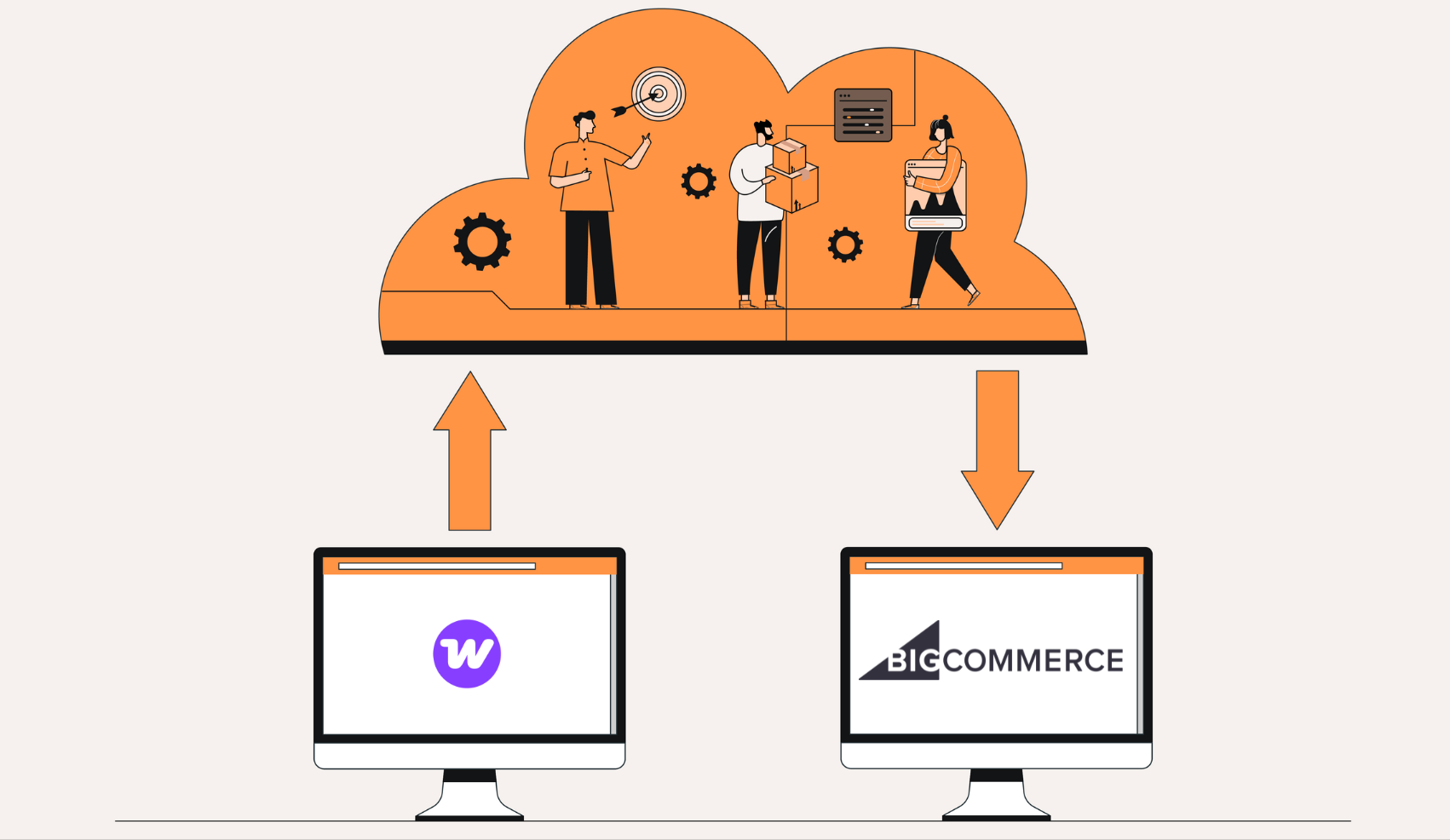
WooCommerce is e-commerce-as-software you operate: your store is powered by WordPress, extended by plugins, and governed by your hosting, security, and performance discipline. This model offers deep control, but it also makes you responsible for stability and upgrade governance.
BigCommerce is an e-commerce-as-a-service you integrate: the commerce engine is platform-managed, while the experience layer is increasingly composable through frameworks like Catalyst (Next.js + GraphQL Storefront API) and modern B2B tooling like the Buyer Portal.
For Australian brands scaling across B2C and B2B, the decision hinges on the operating model:
Do you want to run the platform or run the business?
This article compares WooCommerce and BigCommerce through a technical and operational lens, with a focus on real-world trade-offs: performance, checkout architecture, data scale, integrations, B2B workflows, and total cost of ownership.
Quick Answers: WooCommerce vs BigCommerce (2026)
Q: Which platform is better in 2026: WooCommerce or BigCommerce?
For many growth-focused Australian brands, BigCommerce is the stronger default because it reduces infrastructure responsibility while enabling modern composable storefronts and B2B workflows. WooCommerce can be excellent for teams that want full control and can govern performance, security, and plugin complexity at scale.
Q: What’s the biggest technical difference?
BigCommerce externalises complexity into platform primitives + APIs + composable frameworks, while WooCommerce internalises complexity into hosting + WordPress + plugin governance + database architecture.
Q: Which scales more predictably?
BigCommerce scaling tends to be more predictable because the infrastructure layer is platform-managed. WooCommerce scaling depends on hosting quality, database structure, caching strategy, and plugin compatibility, and requires an active engineering discipline.
Q: What changed recently that affects this choice?
Two key shifts:
- BigCommerce introduced Catalyst, a Next.js headless storefront framework pre-built for SEO, accessibility, and performance.
- WooCommerce accelerated modernisation with High-Performance Order Storage (HPOS) and made Cart/Checkout Blocks the default for new stores since WooCommerce 8.3 (Nov 2023), changing how checkout customisation works.
1) Platform Philosophy: Who Owns Complexity?
WooCommerce: You Own the Stack
WooCommerce is built on WordPress. That means the merchant (or agency) owns:
- hosting + CDN strategy
- database performance and scaling
- plugin security and compatibility
- upgrade sequencing across WP core + Woo + plugins
- caching, observability, and incident response
WooCommerce has improved its scalability story with HPOS, but it still requires architectural governance as order volume grows.
BigCommerce: The Platform Owns Core Operations
BigCommerce owns:
- baseline infrastructure and uptime behaviour
- platform scaling and core security posture
- checkout upgrade paths and bug fixes (unless you fully customise)
Merchants own:
- storefront experience and frontend architecture
- integrations and data governance
- composable layer decisions (Catalyst/headless)
BigCommerce’s philosophy in 2026 is: commerce should be stable and API-driven, while teams innovate at the experience layer.
2) What’s New in 2026: Catalyst vs WooCommerce Modernisation
BigCommerce Catalyst = Fast Composable Storefront Delivery
Catalyst is BigCommerce’s composable, headless storefront framework built using:
-
Next.js
-
React storefront components
-
GraphQL Storefront API
- SEO + accessibility + performance patterns built-in
What makes Catalyst significant is that it reduces the historical friction of headless commerce:
- you don’t need to wire the full storefront from scratch
- you get a “production-grade baseline” quickly
- teams can focus on differentiation rather than boilerplate
WooCommerce HPOS + Checkout Blocks = Better Scale, New Constraints
WooCommerce has introduced major architectural improvements:
- High-Performance Order Storage (HPOS) provides a dedicated order table structure designed for e-commerce workloads rather than WordPress post meta.
- Cart and Checkout Blocks are now the default checkout for new stores since WooCommerce 8.3 (Nov 2023), enabling a block-based checkout workflow.
This is positive, but it introduces a new operational reality:
- plugin compatibility becomes more important (HPOS + blocks support)
- checkout customisation moves into React-style block extensions rather than legacy templates (not always seamless for older stores)
3) Checkout Architecture: Governed SaaS vs Open Checkout Control
BigCommerce
BigCommerce’s Optimised One-Page Checkout is designed to receive ongoing improvements and security updates, and BigCommerce explicitly notes that fully custom checkouts may not receive automatic updates. This creates a clear responsibility model: keep default checkout = stay current; customise heavily = own more risk.
WooCommerce
WooCommerce checkout remains far more modifiable. With Checkout Blocks, checkout is now:
- more consistent
- more conversion-optimised by default
- easier to customise in block themes
But it can also create friction for stores that depend on older gateways or plugin-driven checkout customisations that aren’t fully block-compatible.
4) Scale & Performance: Predictability vs Engineering Levers
BigCommerce
BigCommerce performance is more predictable because:
- infrastructure is managed
- caching and scaling patterns are platform-driven
- fewer “moving parts” under merchant control
This matters for Australian peak-trading volatility (EOFY, Black Friday, Boxing Day): you want performance to be a platform feature, not an internal firefight.
WooCommerce
WooCommerce can be extremely fast, but only if you treat performance as an ongoing engineering discipline:
- object caching
- database optimisation
- plugin minimisation
- page-weight governance
- CDN + image optimisation
HPOS improves the database model, but performance is still a function of your architecture decisions and plugin stack health.
5) B2B & Wholesale: Buyer Portal vs Plugin-Led B2B
BigCommerce B2B Edition
BigCommerce’s B2B advantage is its Buyer Portal, a React-based application enabling:
- account management
- quote requests
- order histories
- company-user workflows
It can be deployed across Catalyst, Stencil, or fully headless implementations.
This aligns well with Australian distributors and wholesalers that need modern buyer self-service without building a portal from scratch.
WooCommerce B2B
WooCommerce B2B is typically assembled via:
- role-based pricing plugins
- quote plugins
- account approval workflows
- custom logic for customer-specific pricing
This is flexible, but it increases:
- plugin dependency
- compatibility testing burden
- long-term maintenance cost
especially as B2B requirements grow.
6) Integrations & Data Gravity: Platform Ecosystem vs Plugin Ecosystem
BigCommerce
BigCommerce is typically used when commerce must integrate cleanly into:
- ERP
- WMS
- PIM
- BI/CDP stacks
Because BigCommerce is API-driven, integration patterns tend to be cleaner and more modular.
WooCommerce
WooCommerce integrations exist in abundance, but the ecosystem is plugin-heavy. The challenge at scale is:
- plugin quality variance
- upgrade fragility
- plugin conflicts
- performance overhead
This doesn’t make WooCommerce worse. It makes governance a core requirement.
7) AI Readiness in 2026: Stable APIs + Structured Data Win
AI in e-commerce depends on:
- clean product and customer entities
- stable APIs
- predictable checkout and conversion funnels
- structured content and product attributes
BigCommerce’s API-first, composable model makes it easier to layer AI into merchandising, experimentation, and B2B workflows without destabilising the platform.
WooCommerce can absolutely support AI, but teams need to stabilise:
- data structure consistency
- plugin ecosystem health
- performance budgets
before AI layers become reliable.
8) Decision Framework: Which Fits Which Australian Business?
Choose WooCommerce if:
- you want full ownership and deep control
- you have strong technical maturity
- you can maintain security, hosting, and plugin governance
- you prefer open-source flexibility and can manage its risks
Choose BigCommerce if:
- you want enterprise capability without running infrastructure
- you need composable storefront delivery (Catalyst)
- you want modern B2B buyer workflows (Buyer Portal)
- you need predictable scaling for peak trading
- your strategy is integration-led (ERP/WMS/PIM)
Final Perspective: WooCommerce vs BigCommerce in 2026
In 2026, WooCommerce vs BigCommerce is a strategic question:
Do you want e-commerce to be a stack you operate, or a platform you integrate?
WooCommerce remains powerful when ownership and flexibility are the differentiators.
BigCommerce is increasingly compelling when speed, predictability, B2B maturity, and composable storefront delivery matter more than owning every layer.
The best platform is not the most flexible.
It’s the one your team can run sustainably.
Getting Started: Platform Readiness for Australian B2B & DTC Brands
If you’re considering WooCommerce or BigCommerce (or a migration path), the most useful first step is assessing:
- infrastructure ownership and team capability
- plugin ecosystem health
- B2B buyer workflow requirements
- performance risk during peak trading
- integration maturity (ERP/WMS/PIM)
At Matter Design & Digital, we help teams map their platform choice to the reality of their business, then design the architecture and rollout strategy that reduces risk and accelerates growth.
Questions
Is BigCommerce better than WooCommerce in 2026?
BigCommerce is often better for scaling teams that want predictable performance, managed security, and composable storefront delivery via Catalyst. WooCommerce can be better when full ownership and deep custom control are priorities and the business can govern hosting, plugins, and performance.
What’s the biggest difference between WooCommerce and BigCommerce?
WooCommerce is a merchant-owned stack where you manage hosting, updates, plugins, and performance. BigCommerce is an open SaaS platform where the commerce core is managed, and extensibility happens through APIs, Catalyst storefronts, and integrations.
Does WooCommerce scale well in 2026?
WooCommerce can scale, especially with High-Performance Order Storage (HPOS), but scalability depends on hosting quality, caching strategy, plugin governance, and database optimisation.
What is BigCommerce Catalyst?
Catalyst is BigCommerce’s Next.js-based composable storefront framework built with React storefront components and the GraphQL Storefront API, designed for SEO, performance, and accessibility.
Which platform is better for B2B?
BigCommerce has a modern B2B Edition with a React-based Buyer Portal supporting account management, quotes, and order histories. WooCommerce typically relies on plugins for comparable workflows, which increases governance and compatibility risk.