Neto vs BigCommerce (2026): All-in-One Operations vs Open SaaS Commerce for Australian B2B & Multi-Channel Brands
In 2026, the Neto vs BigCommerce decision is less about e-commerce features and more about the operating model. Both platforms can run sophisticated Australian B2B and B2C e-commerce, but they optimise for opposite realities.
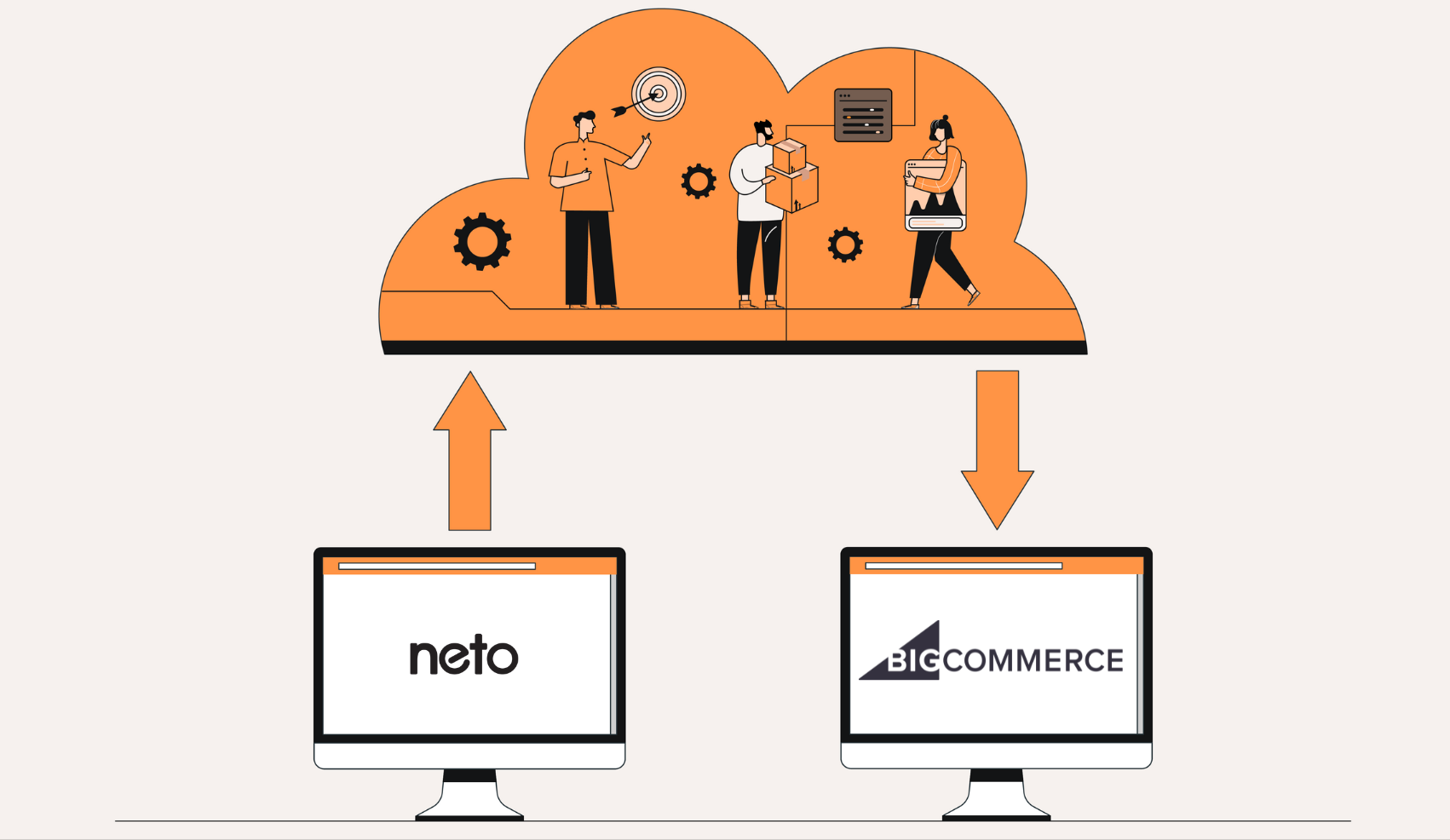
Neto is designed as a unified commerce suite, combining inventory, order management, multi-channel selling, and shipping workflows inside one system.
BigCommerce is designed as open SaaS commerce, with strong core commerce, modern APIs, and composable storefront tooling (Catalyst), intended to plug cleanly into larger ecosystems (ERP, PIM, WMS, CDP, analytics).
For Australian wholesalers, distributors, and multi-channel retailers, that difference determines how quickly teams can evolve storefront experience, integrate systems, support modern B2B buying, and adopt AI-driven automation, without creating operational debt.
Quick Answers: Neto vs BigCommerce (2026)
Q: Which platform is better in 2026: Neto or BigCommerce?
For operation-heavy Australian businesses needing a unified inventory + shipping + marketplace operations layer, Neto can be compelling. For growth-oriented brands that prioritise composability, integrations, modern B2B portals, and scalable architecture, BigCommerce is typically the stronger foundation.
Q: What’s the biggest technical difference?
Neto internalises operational workflows in-platform (inventory/OMS/shipping) while BigCommerce externalises complexity into APIs and integrations (ERP/WMS/PIM), keeping the commerce core extensible and composable.
Q: Which platform is better for B2B in 2026
BigCommerce has a mature B2B Edition with Buyer Portal, roles/permissions, shared shopping lists, quoting, and multi-company features.
Neto remains strong for ops-led wholesale workflows but is less widely positioned as a modern B2B portal layer.
Q: Which is better for composable storefronts?
BigCommerce has a clear composable strategy via Catalyst (Next.js + GraphQL Storefront API + React components) and supports optimised storefront delivery patterns. Neto storefront flexibility exists, but composability is not its primary product narrative.
1) Platform Philosophy: Suite vs Ecosystem
The most important lens in 2026 is where the platform expects your complexity to live.
Neto: Unified Commerce Suite (Operation-First)
Neto is positioned as an Australian all-in-one commerce platform, bringing together:
- online stores
- POS
- inventory management
- order management
- marketplace connections
- shipping and fulfilment workflows
This suite-first approach benefits businesses where:
- operational workflows are the differentiator
- inventory and fulfilment are complex
- teams want fewer external systems
Trade-off: Tight operational coupling inside one system can reduce flexibility when brands want to change storefront experience, experiment quickly, or integrate best-of-breed tools.
BigCommerce: Open SaaS + Composable Commerce
BigCommerce is designed as open SaaS commerce, the commerce engine sits in the middle of your ecosystem, connected via APIs.
Its modern approach includes:
- GraphQL Storefront API
- headless and composable patterns
- Catalyst storefront framework (Next.js)
BigCommerce typically suits businesses where:
- commerce must integrate into ERP/WMS/PIM stacks
- teams want composability and best-of-breed tools
- multiple channels and buyers must be supported without duplicating logic
Trade-off: You will own more integration governance. BigCommerce avoids becoming your OMS/WMS, by design.
2) Total Cost of Ownership (TCO): Bundled Ops vs Integrated Stack
In 2026, platform decisions are evaluated on the total cost of ownership, not licence fees.
Neto TCO Pattern: Bundled Efficiency
Neto reduces TCO by bundling operations:
- inventory and orders inside the platform
- shipping tooling integrated
- marketplace sync capabilities
This reduces the number of systems you need to integrate and maintain.
Best for: businesses that want operational consolidation and fewer vendors.
BigCommerce TCO Pattern: Composability with Governance
BigCommerce lowers TCO through:
- stable, scalable commerce core
- less “platform lock-in” at the experience layer
- strong ecosystem for integrations and B2B features
But the cost profile depends on the architecture:
- best-of-breed integrations require governance
- integration maintenance must be planned
- successful implementations treat integration as a product, not a one-off project
Best for: organisations investing in a flexible commerce foundation and integrating into broader business systems.
3) Storefront & Frontend Architecture: Traditional vs Catalyst (Composable)
BigCommerce: Catalyst is the Key Differentiator in 2026
BigCommerce's storefront direction has changed meaningfully with Catalyst, an open-source framework built on:
- Next.js
- React components
- GraphQL Storefront API
- preconfigured SEO/performance/accessibility patterns
Catalyst isn’t just “headless.” It’s a structured, composable approach designed to accelerate modern storefront builds while staying aligned with BigCommerce’s commerce core.
This is important for brands that need:
- high performance
- modern dev workflows
- composable architecture without building everything from scratch
Neto: Storefront Capable, but Ops is the Centre of Gravity
Neto can deliver functional storefronts, but its product messaging prioritises operations, inventory, multi-channel selling, and unified workflows over composable storefront innovation.
For brands where storefront differentiation and experimentation are the primary advantage, BigCommerce’s Catalyst + composability may provide more leverage.
4) Checkout: Flexibility vs Security Update Guarantees
BigCommerce Checkout: Optimised One-Page Checkout + Custom Options
BigCommerce’s default checkout is Optimised One-Page Checkout, and BigCommerce explicitly notes that custom checkout implementations may not receive automatic updates (features, bug fixes, security), recommending the default checkout unless merchants accept this risk.
This gives you:
- a secure, updated default checkout path
- the option for custom checkout scripts with a clear responsibility model
This is a strong fit for enterprise teams that need control but still want a safe default.
Neto Checkout
Neto’s checkout approach is less prominently documented as a distinct product narrative compared with BigCommerce’s explicit “Optimised One-Page Checkout” pathway.
Neto’s differentiator is not checkout innovation, but its ops workflow unification.
5) B2B in 2026: Buyer Portal vs Ops-Led Wholesale
BigCommerce B2B Edition: Stronger “B2B Portal” Story
BigCommerce’s B2B Edition includes:
- Buyer Portal user management and roles
- company-based permissions
- shared shopping lists and buy again
- quoting features
- multi-company hierarchy and permissioning improvements
This aligns with modern B2B expectations: fast self-serve, controlled permissions, and repeat buying patterns.
Neto: Stronger “Wholesale Ops” Story
Neto positions itself as a platform for B2B and multi-channel businesses where:
- inventory workflows
- fulfilment speed
- operational control
are the centre of gravity
If your B2B strategy is primarily operational (instead of buyer-experience-led), Neto can fit well.
6) Inventory & Fulfilment: Integrated Ops vs Connected Ops
Neto: Native Operational Advantage
Neto is explicitly built for inventory-heavy and multi-channel operations, with integrated shipping tools and operational control as core platform value.
This is ideal for:
- distributors and multi-warehouse businesses
- marketplace operations
- tight shipping/label workflows
BigCommerce: Strong Commerce Core + Integrations
BigCommerce excels when inventory and fulfilment are owned by:
- ERP
- WMS
- PIM
- 3PL integrations
This tends to be the preferred model for businesses scaling to complexity, because inventory is treated as a system of record outside the commerce platform.
7) AI, Automation & Future Readiness
AI-driven commerce workflows rely on:
- stable APIs
- clean product and customer entities
- event-based integrations
- experimentation governance
BigCommerce Advantage: API + Ecosystem Readiness
BigCommerce’s platform strategy: open SaaS + composability + modern B2B tooling, creates strong conditions for AI layers to:
- personalise experiences
- automate merchandising
- integrate CPQ and quoting
- orchestrate multi-channel pricing rules
Neto Advantage: Operational Automation
Neto’s automation advantage is operational:
- inventory + order workflows
- shipping + channel synchronisation
- back-office simplification
Which model is better depends on whether your AI roadmap is:
- CX-led intelligence (BigCommerce tends to win)
- ops-led automation (Neto can win)
8) Talent, Ecosystem, and Long-Term Optionality
BigCommerce
BigCommerce benefits from:
- global enterprise ecosystem
- stronger composable and headless talent overlap (Next.js, React)
- broader implementation patterns via agencies and partners
Neto
Neto is Australia-centric with a smaller ecosystem.
That can be an advantage for local support fit, but it can constrain:
- talent availability
- optionality in integrations
- composable innovation pathways
9) Decision Framework: Which Platform Fits Which Australian Business?
Choose Neto if your priority is:
- ops-first workflow consolidation
- inventory-heavy multi-channel retail
- integrated shipping and back-office efficiency
- fewer external vendors to manage
Choose BigCommerce if your priority is:
- scalable composable architecture (Catalyst)
- modern B2B portals and buyer experiences
- deep integration into ERP/WMS/PIM stacks
- flexible growth across channels without coupling everything into one system
Final Perspective: Neto vs BigCommerce in 2026
In 2026, the platform question becomes:
Do you want your e-commerce platform to be your operations suite, or your commerce engine inside a broader ecosystem?
Neto wins when operational consolidation is the advantage.
BigCommerce wins when flexibility, integration, and composable innovation are the advantages.
The brands that win the next era of commerce won’t be the ones with the most features. They’ll be the ones with the cleanest operating model, where commerce can evolve quickly, systems stay aligned, and teams aren’t trapped maintaining complexity they don’t need.
Getting Started: Platform Readiness for Australian B2B & B2C Brands
If you’re assessing Neto, BigCommerce, or a migration path, the fastest step is to evaluate:
- operational complexity
- inventory ownership model
- B2B buying requirements
- storefront differentiation needs
- integration governance maturity
At Matter Design & Digital, we help teams map their platform choice to the reality of their business, then design the architecture and rollout strategy that reduces risk and accelerates growth.