Shopify vs Neto (2026): A Future-Focused Ecommerce Platform Comparison for Australian B2B & DTC Brands
In 2026, choosing between Shopify and Neto is no longer a feature-by-feature comparison. It is a strategic decision about how your e-commerce platform behaves under scale, complexity, and continuous change.
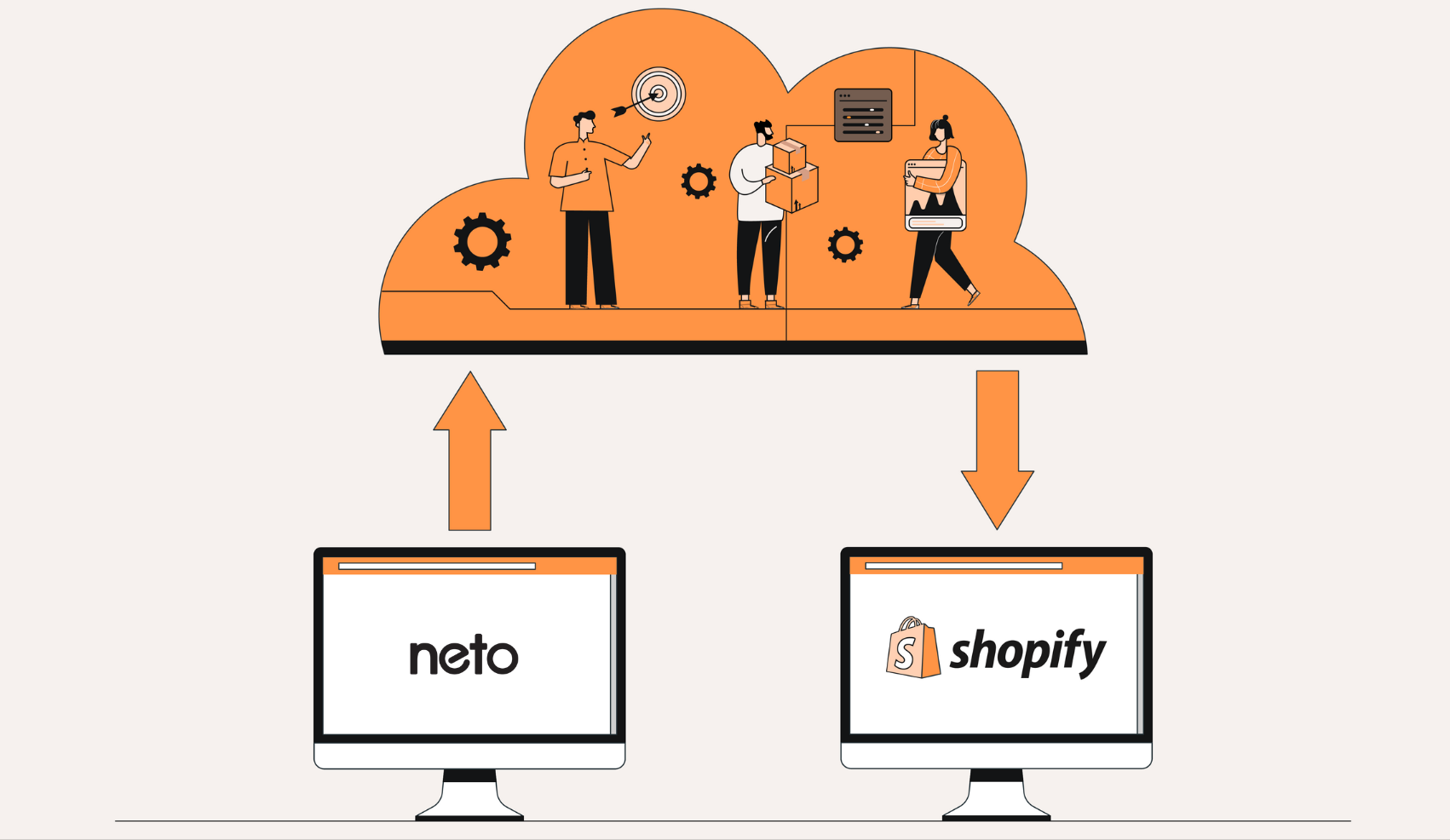
As Australian brands face rising B2B requirements, omnichannel pressure, AI-driven commerce, and tighter performance expectations, platform architecture has become either a long-term growth accelerator or a structural constraint. This shift mirrors broader global ecommerce trends, where platforms increasingly act as operating systems rather than simple storefront tools (McKinsey – The State of AI).
This article compares Shopify and Neto through a technical, architectural, and operational lens, helping ecommerce leaders make platform decisions that will still hold up three to five years from now.
Quick Answers: Shopify vs Neto (2026)
Q: Which platform is better in 2026: Shopify or Neto?
For most growth-oriented Australian ecommerce brands, Shopify is the stronger default due to lower operational overhead, faster iteration, broader integrations, and a more future-ready architecture. Neto can still make sense for businesses whose primary constraint is legacy operational workflows.
Q: What’s the biggest technical difference?
Shopify externalises complexity through stable platform primitives, APIs, and a large app ecosystem (Shopify Developer Docs), while Neto internalises complexity within the core platform, offering deeper operational control but tighter coupling.
Q: Which platform scales more predictably?
Shopify typically performs more predictably under traffic spikes because hosting, caching, and scaling are managed as part of the service, leveraging global CDN and platform-managed infrastructure patterns (Cloudflare – What is a CDN?). Neto’s scalability depends more on configuration, infrastructure, and operational governance.
Q: Which is better for B2B?
Shopify has rapidly matured into a modern B2B platform, especially at the enterprise tier, supporting blended DTC and B2B experiences (Shopify Plus B2B). Neto suits ops-led wholesale businesses that prioritise internal process continuity.
1) Platform Philosophy: Where Complexity Lives
The most important distinction between Shopify and Neto is where complexity is allowed to exist.
Shopify: Complexity at the Edges
Shopify is designed around a simple idea: commerce infrastructure should be invisible to the merchant. The platform keeps the transactional core: checkout, payments, security, scaling, highly standardised, while allowing extensibility through APIs, apps, and platform extensions (Shopify Enterprise Overview).
This approach:
- reduces operational risk
- lowers maintenance burden
- enables faster iteration
- allows teams to innovate without destabilising the core
Neto: Complexity in the Core
Neto is often chosen by Australian retailers that need deep operational control. Inventory logic, warehouse workflows, and operational rules are tightly coupled into the platform itself (Neto Platform Overview).
This can be effective where:
- operations are the primary differentiator
- processes are stable and unlikely to change
The trade-off is that tight coupling slows change, increases reliance on specialists, and raises the cost of adapting to new channels or CX expectations.
2) Total Cost of Ownership: Platform Cost ≠ Platform Price
A common mistake in platform selection is focusing on licensing fees instead of long-term cost curves. Gartner defines Total Cost of Ownership (TCO) as the full lifecycle cost of acquiring, operating, and maintaining a system, not just its upfront price (Gartner – Total Cost of Ownership).
Shopify TCO Profile
Shopify’s pricing is transparent, but its real advantage lies in what it removes:
- hosting and infrastructure management
- security and compliance overhead
- upgrade and maintenance burden
- custom development for common use cases
Over time, this typically results in:
- lower people cost
- fewer brittle integrations
- faster ROI on changes
Neto TCO Profile
Neto can appear cost-effective at first, particularly for ops-heavy businesses. However, long-term costs often increase due to:
- specialist dependency
- custom integration maintenance
- slower iteration cycles
- higher internal operational overhead
Leadership insight: In 2026, the most expensive platform is rarely the one with the highest subscription fee; it’s the one that slows learning and change.
3) Delivery Velocity & Scale Behaviour
Shopify
Shopify is optimised for delivery velocity:
- managed infrastructure
- reusable components
- prebuilt integrations
- predictable deployment workflows
This allows teams to spend more time on experience, experimentation, and growth, and less on platform plumbing.
Under scale, Shopify handles:
- traffic spikes
- campaign surges
- international expansion
without requiring merchant intervention.
Neto
Neto projects often require:
- more upfront configuration
- deeper operational mapping
- ongoing performance tuning
Scalability outcomes depend heavily on how well the platform is governed post-launch.
Key difference: Shopify shifts optimisation effort from “keeping the site running” to “improving conversion and experience.”
4) Storefront, Content & Experience Velocity
Shopify
Shopify supports:
- modern theme-based storefronts
- flexible content modelling
- rapid experimentation
- hybrid and headless approaches where justified
Content and experience teams can iterate quickly without constant developer involvement, which is critical as commerce becomes more dynamic and personalised.
Neto
Neto storefronts can be customised, but achieving modern UX patterns and performance budgets typically requires:
- more custom development
- stronger governance
- higher maintenance investment
This can slow marketing and CX teams over time.
5) Ecosystem Gravity & Integration Strategy
Shopify
Shopify’s ecosystem is one of its strongest advantages:
- thousands of vetted apps
- deep integrations across marketing, logistics, analytics, ERP, and CX
- strong global partner network
In practice, Shopify becomes less about features and more about integration surface area plus governance.
Neto
Neto’s ecosystem is narrower, which often leads to:
- custom-built connectors
- greater internal ownership of integrations
Custom integrations can be valuable, but only when they are truly differentiating. Otherwise, they become long-term liabilities.
6) B2B & Wholesale: Legacy Control vs Modern Self-Service
Shopify
Shopify’s B2B capabilities now support:
- company accounts and roles
- customer-specific pricing
- mixed DTC and B2B storefronts
- self-serve buyer experiences
Shopify’s B2B direction reflects broader shifts in buyer behaviour, where B2B customers increasingly expect consumer-grade self-service experiences.
Neto
Neto suits:
- ops-led wholesale workflows
- businesses preserving legacy processes
Strategic question: Are your B2B buyers optimising for your internal workflows or for their own efficiency?
7) AI, Automation & Future Readiness
In 2026, AI adoption is not a feature; it is an architectural outcome.
AI systems require:
- clean, accessible data
- stable APIs
- event-driven workflows
- consistent product and customer entities
Shopify
Shopify’s architecture and ecosystem make it easier to:
- integrate AI tools
- automate merchandising and operations
- layer intelligence without rebuilding the platform
Neto
AI adoption is possible, but often requires:
- more custom work
- deeper platform intervention
- stronger data governance
Platforms that are harder to change are harder to automate.
8) Security, Compliance & Operational Risk
Shopify
Shopify assumes most of the security burden, including SSL, PCI compliance, and platform patching, reducing risk for merchants (Shopify Security).
Neto
Security is more of a shared responsibility, relying on:
- configuration
- operational discipline
- ongoing maintenance
Leadership reality: Security is not a feature. It’s a commitment. Choose a model your team can sustain.
9) Talent, Support & Platform Longevity
Shopify
- large global talent pool
- strong documentation
- broad agency ecosystem
- rapid platform evolution
Neto
- smaller ecosystem
- fewer specialist partners
- slower innovation cycles
Talent availability directly impacts long-term cost and risk.
10) Decision Framework: Which Platform Fits Which Business?
Shopify is typically best for brands that:
- prioritise growth and iteration speed
- want lower operational overhead
- plan to scale B2B and DTC together
- need predictable performance
- want AI-ready commerce foundations
Neto can make sense for businesses that:
- are deeply ops-led
- rely on tightly coupled inventory workflows
- have stable processes that won’t change significantly
- prioritise internal control over CX velocity
Final Perspective: Shopify vs Neto in 2026
By 2026:
- ops-heavy platforms feel increasingly restrictive
- highly customised legacy setups feel fragile and expensive
- platforms that balance flexibility with simplicity pull ahead
The brands that succeed won’t be the ones with the most features.
They’ll be the ones with clean platform boundaries, scalable operations, and the ability to adapt quickly as commerce expectations change.
For most Australian e-commerce brands planning for scale, that bias points toward Shopify, especially when paired with disciplined architecture and governance.
Need Help Migrating from Neto to Shopify?
Migrating from Neto to Shopify can be complex for businesses with advanced inventory logic, wholesale pricing, multi-warehouse setups, or tightly coupled integrations.
Common challenges include:
- large-scale data migration via APIs
- translating Neto-specific rules into Shopify-native logic
- importing historical data and structured attributes
- rebuilding B2B workflows without disruption
- replacing legacy integrations with modern tools
At Matter Design & Digital, we support the entire Neto → Shopify journey. From technical migration and platform architecture to UX optimisation and post-launch performance.