The Rise of Autonomous Stores: How AI Will Run 70% of Ecommerce Operations by 2028
Why the next wave of e-commerce will be powered by systems that think, act and optimise without human intervention.
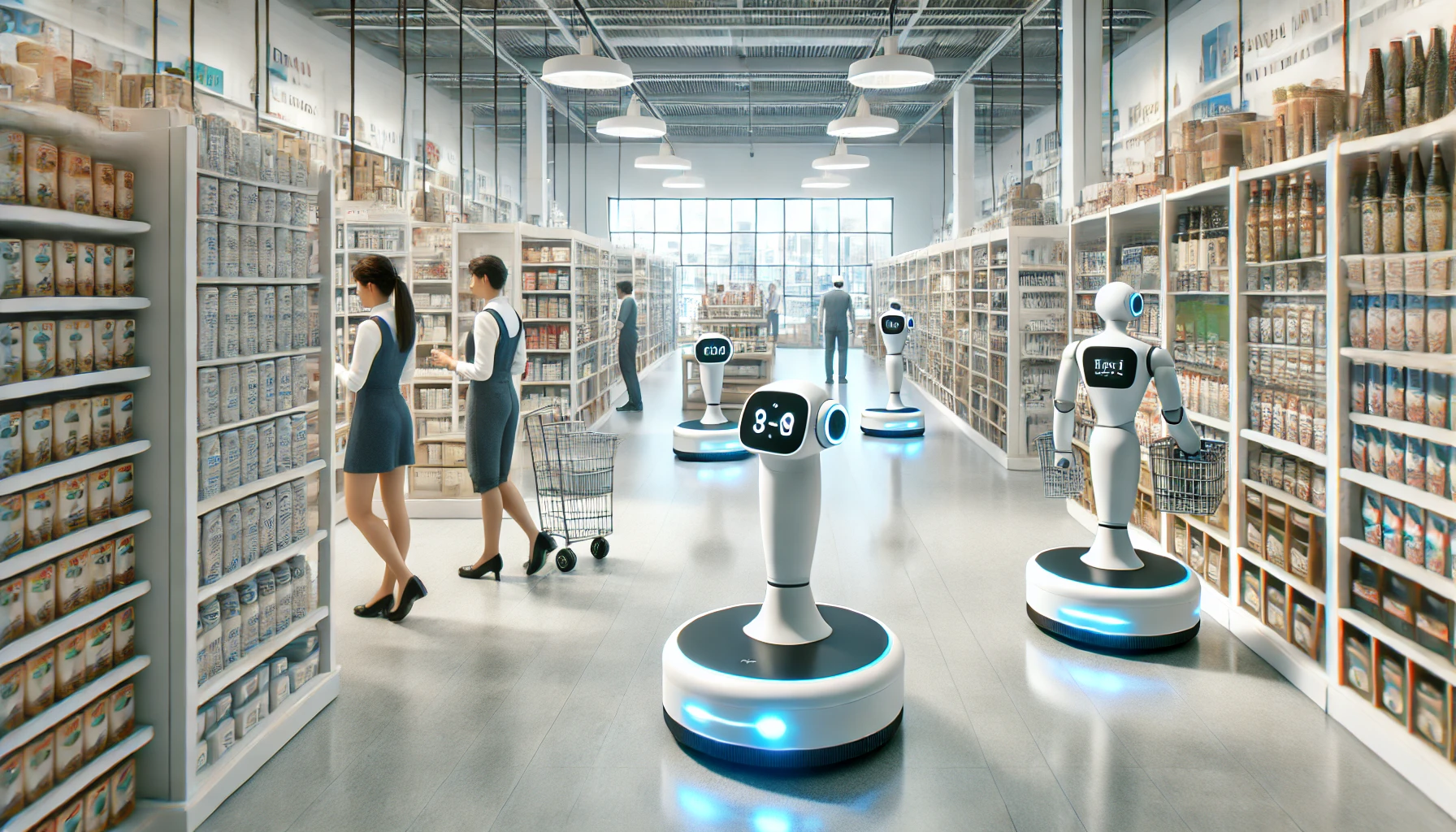
The most disruptive change in e-commerce over the next five years will not be a new sales channel, marketing trend or payment method; it will be the transformation of stores into self-governing systems capable of making decisions, optimising experiences, and executing operations without human intervention.
By 2028, leading analysts project that autonomous store ecosystems will handle 60–70% of ecommerce operations, from merchandising and marketing to CX, logistics, and revenue optimisation. This convergence is driving the shift to:
- Agentic AI
- Predictive analytics
- API-driven architectures
- Auto-optimising UX systems
- Autonomous workflow engines
This article presents a comprehensive, technical and visionary thought-leadership analysis of how the shift to fully autonomous stores is unfolding and what it means for retailers, platforms and e-commerce agencies.
Why Autonomous Commerce Is Inevitable by 2028
The operational complexity curve has exceeded human capacity
Between 2020 and 2024, ecommerce operations became exponentially more complex:
- App ecosystem growth: Shopify’s app market increased to over 10,000+ apps
- Rising operational tasks: average brand executes 250–400 recurring workflows per week
- Data volume surge: global ecommerce data doubled every 12–18 months
- Personalisation expectation: 71% of consumers expect personalised experiences (McKinsey, 2024)
- Omnichannel pressure: the average retailer now manages 5–9 channels
By 2025–2026, this complexity will exceed what teams can manage manually. The result: AI won’t be a competitive advantage. It will be the only viable operator.
Defining the Autonomous Store
An autonomous store is not an AI plugin or chatbot. It is a self-governing commerce system composed of four integrated layers:
Layer 1: Predictive Intelligence (Data + Forecasting Models)
AI models predict:
- SKU demand with 92% accuracy
- Customer intent in real time
- Supply chain constraints 2–6 weeks ahead
- LTV & churn risks
- Price elasticity and buying probability
These engines typically employ hybrid architectures that combine LSTMs, transformer-based models, and time-series forecasting frameworks (e.g., Prophet, DeepAR).
Layer 2: Decision Engines (Agentic AI)
AI agents interpret data and decide:
- the optimal product ordering
- which creative to deploy
- how to allocate marketing budget
- what discount is required to convert
- which warehouse routes the order
This uses:
-
policy-based reinforcement learning
-
constraint-aware optimisation algorithms
-
contextual bandits for experimentation
This is where e-commerce becomes algorithmically directed.
Layer 3: Execution Layer (Autonomous Workflows)
AI directly triggers actions via:
- API calls
- webhook-triggered automation
- auto-generated code snippets
- dynamic schema updates
- edge-side deployment of personalisation rules
This layer eliminates human execution.
Layer 4: Governance & Guardrails
Includes:
- human approval flows
- audit logs
- rollback mechanisms
- AI quality assurance pipelines
- ethical scoring on decisions
This ensures the system remains aligned with brand and financial goals.
How AI Automates 70% of E-commerce by 2028
Below is a category-by-category breakdown, backed by projected adoption rates.
A. Autonomous Merchandising (90% automated)
Merchandising is becoming the first major function to go autonomous. By 2027, Gartner predicts 80% of product data management will be AI-generated. AI will manage:
- product categorisation
- attribute extraction
- variant prediction
- SEO metadata generation
- collection curation
- dynamic product sequencing
- PDP content optimisation
- automated badge triggers (low stock, trending, high conversion)
Why it’s automatable:
Large language models + computer vision + structured catalogue data create a perfect automation environment.
B. Autonomous Marketing Operations (60–80% automated)
Marketing transforms into an AI-driven orchestration layer. Early tests show AI-generated campaigns reduce CPA by 23–32%. AI systems will:
- generate creative assets
- predict campaign ROAS
- adjust bids in real time
- identify audience microsegments
- run multi-variable tests
- determine optimal budget allocation
- schedule promotions dynamically
Technical drivers:
- generative model pipelines
- multi-arm bandit algorithms for testing
- predictive budget modelling
- closed-loop feedback systems between ads → onsite behaviour
C. Autonomous Pricing & Promotions (65–90% automated)
Dynamic pricing becomes the baseline. Retailers using dynamic pricing see a margin lift of 30%. AI evaluates:
- competitor prices (scraped or API-fed)
- supply & demand ratios
- inventory ageing
- customer intent scoring
- price elasticity plots
- lifetime value projections
By 2028, autonomous systems will run:
- flash sale optimisation
- personalised pricing
- inventory-based discounting
- bundle structuring
- B2B volume pricing rules
D. Autonomous CX & Service (80–95% automated)
AI shifts from “respond” to resolve. Instead of dialogue agents, we move to:
- action-oriented agents
- API-enabled problem solvers
- end-to-end workflow drivers
LLM-based agents already resolve 60–80% of e-commerce tickets without escalation. AI will:
- process refunds
- create replacements
- adjust subscriptions
- manage warranties
- handle complex inquiries
- triage exceptions to humans
E. Autonomous Logistics & Inventory (50–80% automated)
Predictive logistics systems can reduce shipping costs by 12–18% and OOS events by 35%. AI optimises:
- routing
- label printing
- packaging decisions
- warehouse selection
- demand forecasting
- inventory balancing across regions
F. Autonomous UX & Storefront Personalisation (70–90% automated)
The storefront will rebuild itself for each visitor in real-time. Changes include:
- adaptive homepages
- AI-refactored navigations
- personalised PDP layouts
- intent-aware checkout flows
- contextual cross-sells
- session-based optimisation
Technical basis:
- edge-side rendering
- dynamic middleware
- vector embeddings for user context
- streaming inference models for real-time adaptation
How Shopify, BigCommerce & Adobe Are Enabling Autonomous Commerce
Shopify (AI-Native Merchant OS)
Key innovations:
- Sidekick 2.0: Ops-level execution agent
- Predictive APIs: LTV, demand, probability-of-purchase
- Hydrogen + GenUI: AI-generated storefront components
- AI-native B2B workflows: automated pricing, catalogue rules
Shopify's long-term strategy is to be the central decision-making hub for SMB → mid-market merchants.
BigCommerce (Composable AI Orchestration)
BigCommerce is becoming the infrastructure layer that lets AI orchestrate best-in-class apps. Innovations:
- AI-driven catalogue management
- AI orchestration across PIM, ERP, and search
- enterprise-scale product classification
- prediction-driven headless search
BigCommerce is betting on open architecture + AI coordination.
Adobe Commerce (Experience Cloud + AI)
Adobe’s differentiator: enterprise-grade first-party data + real-time AI. Capabilities:
- AI-powered segmentation
- real-time CDP orchestration
- genetic model-driven asset generation
- dynamic page adaptation
- B2B purchasing intelligence
Adobe is building deeply personalised autonomous experiences.
The Architecture of a Fully Autonomous Store
A. Data Layer: unified CDP, PIM, CRM, OMS
B. Intelligence Layer: LLMs, predictive models, RL systems
C. Decision Layer: agentic systems, action frameworks
D. Execution Layer: APIs, automations, integrations
E. Governance Layer: rules, QA, approval flows
This stack will become the industry norm by 2027 - 2028.
What Retail Teams Will Look Like in 2028
Teams shift from operational → supervisory.
- Marketers become growth architects
- Developers become system orchestrators
- Merchandisers become strategic planners
- CX teams handle only high-complexity cases
- Leaders focus on model oversight & brand positioning Accenture projects that AI-augmented teams will be 40% more productive with 30% less operational overhead.
What Brands Must Do Between 2024 - 2027 to Prepare
1. Invest in data cleanliness & structure
AI autonomy depends on clean PIM/CDP systems.
2. Move toward composable or flexible architectures
Closed monoliths choke automation.
3. Adopt AI-native tools (not AI app plugins)
Look for platforms with agentic execution capabilities.
4. Build governance policies early
Bias, accuracy, and financial limits must be controlled.
5. Start running automation pilots now
Teams that don’t train AI won’t benefit from AI.
Final Perspective: Stores That Think, Act and Grow on Their Own
By 2028, autonomous stores will become the default model for modern ecommerce. They will:
- predict customer intent
- decide optimal pathways
- deploy experiences in seconds
- run campaigns without human input
- optimise revenue automatically
- route logistics without oversight
- provide fully autonomous CX
- learn and improve continuously
This shift represents the defining technological transformation of the decade. Not because AI replaces people, but because teams that embrace autonomous systems can operate at a scale, speed, and precision no human-only system can match.