Unified Commerce System Design: Rethinking How Digital Commerce is Built
Traditional commerce relied on ERP to manage operations, but this approach is slow, complex, and limits flexibility. Unified commerce separates digital commerce from ERP, using digital specialised platforms to manage real-time inventory, pricing, and customer interactions.
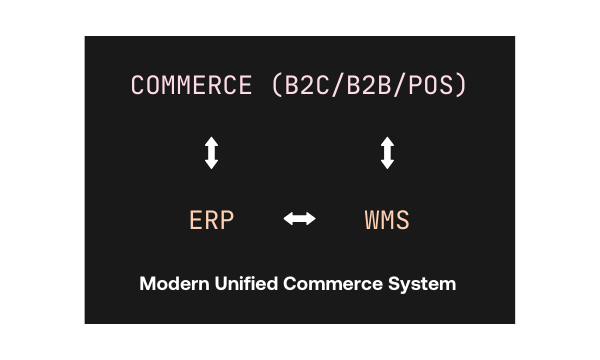
Rethinking How Digital Commerce is Built
In an era where customers expect seamless experiences across every channel — online, in-store, and marketplaces — many businesses are struggling to keep up. The challenge? Legacy commerce systems that rely too heavily on ERP to power customer-facing operations.
The solution? A Unified Commerce System Design — a modern architecture that places best-in-class commerce platforms and a dedicated data layer at the centre of your digital strategy. In this article, we’ll explore what Unified Commerce looks like and how it empowers businesses to be more agile and competitive in today’s omnichannel world.
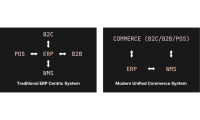
Why ERP-Centric Commerce Holds Businesses Back
ERPs were never designed to power customer-facing digital sales channels. They’re great for managing finances, procurement, and supply chain processes — but slow, expensive, and complex when used to manage product data, pricing, and inventory for fast-moving eCommerce and in-store sales.
When businesses rely on ERP to run eCommerce and POS, they face:
- Slow time-to-market for new products and campaigns.
- Complicated integrations for every channel.
- Poor customer experience from inconsistent data across platforms.
As more businesses embrace omnichannel strategies, the need for a more flexible and responsive system has never been greater.
Introducing Unified Commerce: A More Agile System Design
Unified Commerce is an architectural approach that decouples commerce operations from ERP. It puts platforms like Shopify and BigCommerce — built specifically to manage digital sales channels — at the centre of the system, supported by a Commerce Data Platform (CDP) or a Digital Commerce Manager (DCM), like Qooly.io.
POS Flexibility Depending on Platform
- With Shopify, merchants can leverage Shopify POS for seamless in-store and online integration or choose to connect any POS system that meets their needs.
- With BigCommerce, Lightspeed POS is a powerful partner for managing in-store sales in a unified way.
How It Works
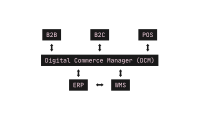
- Shopify or BigCommerce handle customer-facing eCommerce (B2B and B2C).
- The POS system manages in-store sales and inventory.
- A Commerce Data Platform (or Qooly as DCM) centralises product data, pricing, and inventory.
- ERP is limited to financial and supplier management, reducing integration complexity.
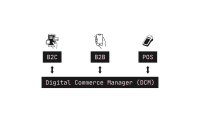
What Makes Up a Unified Commerce System?
1. Commerce Data Platform / Digital Commerce Manager (DCM)
This is the brain of the operation, managing:
- Enriched product information (images, SEO, content).
- Real-time inventory visibility.
- Channel-specific pricing and promotions.
- Customer profiles and order history.
Whether it’s Qooly or Shopify’s own capabilities, this layer ensures accurate data across all sales channels.
2. eCommerce Platform (Shopify or BigCommerce)
Handles all online sales, including B2C, B2B portals, and marketplaces, with custom storefronts and checkout experiences designed to convert.
3. POS System (Shopify POS or Lightspeed POS)
Connects in-store operations to the same commerce data source, providing unified inventory and customer experiences.
4. ERP for Back-Office
Manages finances, suppliers, and reporting, but no longer needs to handle day-to-day commerce operations.
Benefits of Unified Commerce
1. Faster Time to Market
Launch new products, adjust prices, or run promotions in minutes, not weeks.
2. Lower IT Overhead and Risk
Fewer complex integrations, less reliance on custom ERP workflows, and greater flexibility.
3. Better Customer Experiences
Real-time inventory, consistent pricing, and personalised offers across every channel.
4. Future-Proof Flexibility
Add new sales channels (marketplaces, social commerce) easily, without expensive custom work.

Who Manages It? The Role of a Digital Commerce Manager
A Digital Commerce Manager (DCM) — like Qooly — or built-in capabilities in Shopify, oversee the unified commerce system, ensuring:
- Data flows smoothly and accurately.
- Integrations are maintained and optimised.
- Teams are aligned on pricing, product launches, and campaigns.
This role brings together IT, sales, and marketing teams around a single source of truth.
Real-World Impact
Businesses that adopt a Unified Commerce System often report:
- 30% improvement in operational efficiency.
- Reduced time-to-market for product launches.
- Better customer loyalty from consistent experiences.
Imagine running a sale and having pricing and stock updates appear instantly online and in-store — that’s the power of Unified Commerce.
Want to Learn More? Download Our Full Framework
We’ve created a detailed PDF outlining the Unified Commerce System Design, including visual diagrams and a deeper dive into how this architecture works with both Shopify and BigCommerce.
Download the Unified Commerce System Design PDF here
Final Thoughts
Unified Commerce is the future of agile, scalable, omnichannel retail. By moving away from ERP-centric thinking and embracing platform-first commerce, businesses can innovate faster, serve customers better, and future-proof their technology stack.
If you’re ready to rethink how your commerce system is designed — let’s chat.